
Original price was: $1,000.72.$700.72Current price is: $700.72.
Keytruda Qlex 790mg is a subcutaneous cancer immunotherapy combining pembrolizumab and berahyaluronidase alfa. It blocks PD-1 to boost the immune system, offering effective treatment for multiple cancers with faster, more convenient administration compared to traditional IV infusion.
Keytruda Qlex 790mg (berahyaluronidase alfa/pembrolizumab): Complete Guide
Keytruda Qlex 790mg (berahyaluronidase alfa/pembrolizumab) is a breakthrough in cancer immunotherapy. In particular, it combines a potent PD-1 immune checkpoint inhibitor with a drug delivery enhancer, making subcutaneous administration possible. As a result, patients benefit from faster treatment and improved convenience compared to traditional intravenous infusion. Moreover, ongoing research demonstrates its effectiveness across multiple cancer types.
Strength
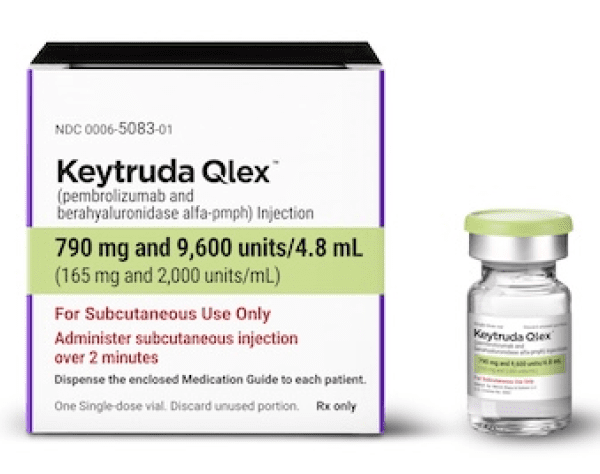
pembrolizumab 790 mg and berahyaluronidase alfa 9,600 units per 4.8 mL (165 mg/2,000 units per mL) injection
Keytruda Qlex combines two active ingredients:
-
Pembrolizumab 790 mg – an immune checkpoint inhibitor targeting PD-1
-
Berahyaluronidase alfa 9,600 units – enhances absorption and distribution
Because of this combination, the drug spreads efficiently under the skin, allowing subcutaneous administration that reduces clinic time. In addition, patients often report greater comfort during treatment.
Generic Name
berahyaluronidase alfa/pembrolizumab
The generic name reflects the dual nature of the formulation. Specifically, pembrolizumab delivers therapeutic anti-cancer effects, while berahyaluronidase alfa facilitates subcutaneous absorption.
Drug Class
Keytruda Qlex belongs to anti-PD-1 and PD-L1 monoclonal antibodies (immune checkpoint inhibitors). These drugs work by blocking immune checkpoints, which allows T-cells to attack cancer cells more effectively. Therefore, Keytruda Qlex enhances the body’s natural immune response.
CSA Schedule
Keytruda Qlex is not a controlled substance. It has no abuse potential and is strictly used under medical supervision for oncology patients.
Labeler / Supplier
Keytruda Qlex is developed and supplied by Merck & Co., Inc., a leading pharmaceutical company known for oncology innovation.
National Drug Code (NDC)
00006-5083
The NDC identifies this specific Keytruda Qlex formulation for prescribing and pharmacy use. Consequently, pharmacies can ensure accurate dispensing.
More about Keytruda Qlex (berahyaluronidase alfa / pembrolizumab)
Keytruda Qlex represents a shift toward patient-friendly immunotherapy. For example, subcutaneous injection reduces infusion time from hours to minutes. Moreover, clinical studies suggest its efficacy is comparable to IV pembrolizumab. Overall, it offers an effective, convenient option for many cancer patients.
Check Interactions
Keytruda Qlex interacts with certain medications:
-
Immunosuppressants – may reduce effectiveness
-
Corticosteroids – can blunt immune response
-
Other checkpoint inhibitors – risk of additive toxicity
Therefore, patients should provide a complete medication list to their healthcare provider before starting therapy. Additionally, monitoring for adverse reactions is essential.
Compare Alternatives
Alternatives to Keytruda Qlex include:
-
Nivolumab – PD-1 inhibitor
-
Atezolizumab – PD-L1 inhibitor
-
Durvalumab – PD-L1 inhibitor
While all belong to immune checkpoint inhibitors, Keytruda often stands out due to broad FDA-approved indications and extensive clinical evidence. In comparison, Qlex subcutaneous administration offers faster and more convenient delivery.
Pricing & Coupons
Keytruda Qlex is a high-cost biologic. However, insurance coverage and patient assistance programs can reduce out-of-pocket expenses. Furthermore, manufacturers often provide co-pay support for eligible patients. Consequently, patients should explore financial options before starting treatment.
Drug Images
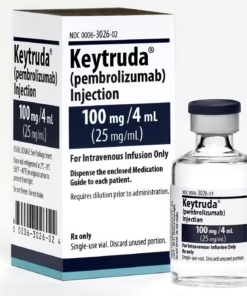
Keytruda Qlex is supplied in a single-dose, sterile vial. Importantly, labeling includes NDC, dosage strength, and administration instructions. Before use, healthcare providers must verify the product to prevent medication errors.
Side Effects of Keytruda Qlex 790mg
Common side effects include:
-
Fatigue
-
Rash
-
Diarrhea
-
Nausea
However, serious immune-related events can occur:
-
Pneumonitis
-
Hepatitis
-
Colitis
-
Endocrine disorders (thyroid, adrenal)
Therefore, early recognition and prompt management are critical. In most cases, healthcare providers can mitigate adverse events with appropriate monitoring.
Dosage Information
Keytruda Qlex is typically administered:
-
Subcutaneously
-
Every 3–6 weeks, depending on the treatment plan
Because it allows subcutaneous delivery, Qlex reduces the time spent in infusion clinics. Moreover, the dosing schedule aligns with patient convenience and clinical efficacy.
During Pregnancy
Keytruda Qlex is not recommended during pregnancy. Specifically, it may harm the developing fetus. Therefore, women should use effective contraception during treatment. Additionally, breastfeeding is generally discouraged.
FDA Approval History
Keytruda has received multiple FDA approvals across cancer types:
-
Initial approval for melanoma
-
Expanded approvals for lung, bladder, cervical, and other cancers
-
Subcutaneous Qlex formulation is under increasing regulatory focus
As a result, patients now have access to a more convenient delivery method without compromising effectiveness.
Drug Class: Anti-PD-1 and PD-L1 Monoclonal Antibodies
Keytruda Qlex belongs to immune checkpoint inhibitors, which:
-
Block PD-1 receptors
-
Prevent tumor immune evasion
-
Activate T-cells
Consequently, this drug class revolutionizes cancer treatment by harnessing the body’s immune system.
En Español
Keytruda Qlex information is also available in Spanish to improve patient understanding and accessibility.
Related Treatment Guides
Breast Cancer
Used for triple-negative breast cancer, often alongside chemotherapy.
Biliary Tract Tumor
Emerging data supports use in difficult-to-treat biliary tumors.
Bladder Cancer
Approved for advanced urothelial carcinoma.
Cervical Cancer
Used in PD-L1 positive recurrent or metastatic cases.
Key Clinical Insights
-
keytruda qlex fda approval – Subcutaneous formulation is gaining regulatory focus.
-
keytruda qlex sales – Continues to be a top-selling oncology biologic.
-
keytruda qlex package insert / pi – Provides dosage, safety, and clinical trial information.
-
Is Keytruda approved for prostate cancer? – Only for certain biomarker-driven cases.
-
Keytruda J code / CPT code – Relevant for billing and insurance.
-
Keytruda infusion vs Qlex subcutaneous – Qlex shortens administration time.
-
Keytruda and small cell lung cancer – Research ongoing; more evidence exists in non-small cell lung cancer.
FAQs
1. What is Keytruda Qlex used for?
It treats multiple cancers by activating the immune system to attack tumors.
2. How does Keytruda Qlex differ from regular Keytruda?
Qlex allows subcutaneous injection, whereas standard Keytruda is IV infusion.
3. Can Keytruda cure cancer?
It does not guarantee a cure but may induce long-term remission in some patients.
4. What are the serious side effects?
Pneumonitis, hepatitis, colitis, and endocrine disorders are the most critical.
5. Is it safe during pregnancy?
No, it may harm the fetus.
6. How often is it administered?
Typically every 3–6 weeks, depending on the cancer type and treatment plan.
Medical Disclaimer
This article is for educational purposes only. Always consult a licensed healthcare provider before starting or changing treatment.
| Keytruda Qlex 790mg (berahyaluronidase alfa/pembrolizumab) | $18,062.72 per vial |
|---|
Be the first to review “Keytruda Qlex 790mg (berahyaluronidase alfa/pembrolizumab)”
Related products
Keytruda uses
Keytruda uses
Reviews
There are no reviews yet.